Curiosity looks good on you Welcome to the human side of medicine

The body is full of plot twists. Let’s follow the clues.

A heartbeat, a stubborn cell, a signal arriving at exactly the wrong time: physiology is the story of how bodies work, adapt and sometimes need help. It is science with real people at the centre.

Before every diagram and diagnosis, there is a person. This series starts with their story, follows a question into the science, then brings what we learn back to human care.

Side effects may include curiosityCells: tiny, dramatic, essentialNo white coat required

Come for the science. Stay for the “wait, the body does what?” moments.

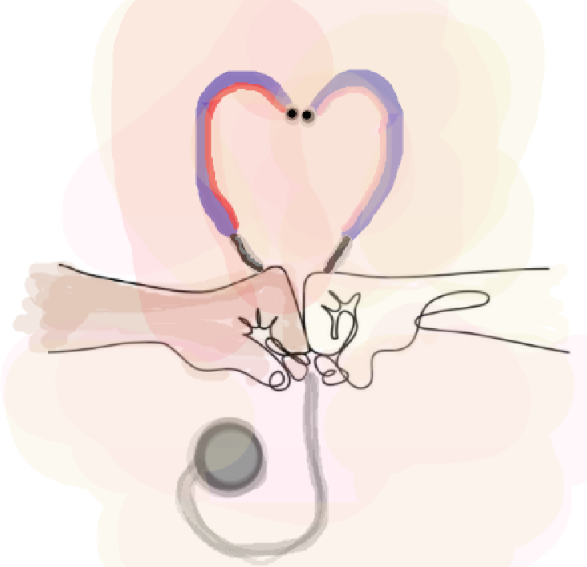
A hand-drawn heart-shaped stethoscope held gently between two hands, surrounded by soft pastel colours
First, we listen.Then we get curious about what the body is telling us.
Cells are tiny.Their group chat is complicated.Let’s decode it with care.
A question worth carrying

When your why is clear, the next step becomes possible.

Your reason may change as you learn. That is allowed. You do not need a perfect answer today—just enough curiosity to take the next honest step.

Part detective work. Part human connection. Occasionally, a memorisation marathon.

You will learn to notice patterns, ask better questions, test ideas and change your mind when the evidence asks you to. The body is wonderfully clever—and sometimes it behaves like it missed the group memo. That is where physiology helps.

But a person is never just a puzzle to solve. Listening, explaining clearly, respecting someone’s choices and admitting uncertainty matter just as much as knowing the pathway. Bring a curious mind, a kind heart and a willingness to look things up. Nobody has every receptor memorised. (If they say they do, check the source.)

Follow the clue

What have you always wanted to know about how the body works?

Picture the person

What helps someone feel safe enough to ask a question?

Keep your why

When study gets hard, what would you want to remember?

The human part is not an extra

A correct answer matters. So does how it lands.

A brilliant explanation delivered at 100 kilometres an hour to someone who is scared is, technically, a lot of information. Good care also means slowing down, checking what a person wants to know, and making room for their questions. (Bedside manner: not an optional add-on.)

Listen first. It is often the best clue.Attention
Translate the jargon. No secret doctor code.Clarity
Ask for help when you need it. That is good practice.Humility
A demanding path, walked with care

The path can be hard. You do not have to turn hard.

Getting into medicine can take persistence, preparation and more than one attempt. The learning keeps going after entry, too. Some days your brain will feel like it has 37 tabs open, and one of them is playing an unexplained lecture.

Rest, support and a change of strategy are part of the work—not proof that you are failing. Keep showing up, learn from what did not work, and take the next step you can manage.

When you are ready

Ready to follow the clues?

Meet a person. Ask a physiology question. Follow the mechanism. Then bring the learning back to the person. That is the journey through each chapter.